# Research Title — Title, Authors and Affiliations Tied by Superscript Numbers
Produce one slide to the following specification.

- Canvas 1920 × 1080
- Margin top 96 right 140 bottom 72 left 140

## Type (px against a 1920px canvas)
venue  24px / 400 / tracking 0.06em / tabular numerals
title  68px / 700 / leading 1.45 / tabular numerals
subtitle  32px / 500 / tabular numerals
authors  34px / 500 / tabular numerals
affiliation  24px / 400 / leading 1.7 / tabular numerals
contact  22px / 400 / tabular numerals

## Colour
Ground #FBFAF6 / Surface #F1EFE8 / Ink #1E1E1C / Muted #6B6A64 / Accent #8A2B1E / Rule #DCD8CC

## Constraints — dropping these breaks it
- Phrase the title as the question or the finding — 'a study on X' tells nobody what was learned
- The subtitle names the design and the sample (randomised trial, 148 people)
- Tie authors to affiliations with superscripts; do not repeat an affiliation per author
- Serif for the title only; gothic from the authors down

Replace the content with [your content]. Keep the measurements and colours as given.
For an exact reproduction, use the verbatim HTML at https://design-vault.pages.dev/designs/research-title-authors/pattern.html.

---

# Question, Hypothesis, Method — The Study's Frame in Three Bands
Produce one slide to the following specification.

- Canvas 1920 × 1080
- Margin top 88 right 140 bottom 56 left 140

## Type (px against a 1920px canvas)
kicker  22px / 500 / tracking 0.12em / tabular numerals
title  50px / 700 / leading 1.4 / tabular numerals
label  40px / 700 / tabular numerals
text  32px / 500 / leading 1.6 / tabular numerals
itemLabel  24px / 700 / tabular numerals
item  26px / 400 / leading 1.5 / tabular numerals
folio  16px / 400 / tabular numerals

## Colour
Ground #FBFAF6 / Surface #F1EFE8 / Ink #1E1E1C / Muted #6B6A64 / Accent #8A2B1E / Rule #DCD8CC

## Constraints — dropping these breaks it
- Put a number in the hypothesis (a 30% drop, within 30 minutes) — otherwise the results cannot be checked against it
- Write the method as four items — design, sample, period, main measure — not prose
- Labels share one column width so all content starts on one line
- Question and hypothesis, two lines each at most

Replace the content with [your content]. Keep the measurements and colours as given.
For an exact reproduction, use the verbatim HTML at https://design-vault.pages.dev/designs/question-hypothesis-method/pattern.html.

---

# Participant Flow — Numbers at Every Stage, and Why People Were Dropped
Produce one slide to the following specification.

- Canvas 1920 × 1080
- Margin top 88 right 140 bottom 56 left 140

## Type (px against a 1920px canvas)
kicker  22px / 500 / tracking 0.12em / tabular numerals
title  50px / 700 / leading 1.4 / tabular numerals
stage  20px / 700 / tracking 0.08em / tabular numerals
n  32px / 700 / tabular numerals
why  20px / 400 / leading 1.6 / tabular numerals
folio  16px / 400 / tabular numerals

## Colour
Ground #FBFAF6 / Surface #F1EFE8 / Ink #1E1E1C / Muted #6B6A64 / Accent #8A2B1E / Rule #DCD8CC

## Constraints — dropping these breaks it
- Give the count at every stage, and make each drop match the excluded number
- State every exclusion reason with its count — unexplained exclusions look like cherry-picking
- Main path shaded, exclusions outlined, so the eye can follow the path
- Lines bend at right angles and never cross

Replace the content with [your content]. Keep the measurements and colours as given.
For an exact reproduction, use the verbatim HTML at https://design-vault.pages.dev/designs/participant-flow-exclusions/pattern.html.

---

# Results Table — Mean ± SD and p, Significant Rows in Bold
Produce one slide to the following specification.

- Canvas 1920 × 1080
- Margin top 88 right 140 bottom 56 left 140

## Type (px against a 1920px canvas)
kicker  22px / 500 / tracking 0.12em / tabular numerals
title  50px / 700 / leading 1.4 / tabular numerals
tableCaption  26px / 400 / tabular numerals
colHead  22px / 500 / tabular numerals
item  26px / 700 / tabular numerals
value  26px / 700 / tabular numerals
diff  26px / 700 / tabular numerals
p  26px / 700 / tabular numerals
note  20px / 400 / leading 1.7 / tabular numerals
folio  16px / 400 / tabular numerals

## Colour
Ground #FBFAF6 / Surface #F1EFE8 / Ink #1E1E1C / Muted #6B6A64 / Accent #8A2B1E / Rule #DCD8CC

## Constraints — dropping these breaks it
- Three rules — top, under the header, bottom — and no vertical rules
- Bold the significant rows and state the threshold (p < .05) under the table
- Give the difference its direction and confidence interval
- Put the table number and each group's n in the title above

Replace the content with [your content]. Keep the measurements and colours as given.
For an exact reproduction, use the verbatim HTML at https://design-vault.pages.dev/designs/results-table-significance/pattern.html.

---

# Figure With Caption — One Large Figure, a Numbered Caption Beside It
Produce one slide to the following specification.

- Canvas 1920 × 1080
- Margin top 88 right 140 bottom 56 left 140

## Type (px against a 1920px canvas)
kicker  22px / 500 / tracking 0.12em / tabular numerals
title  50px / 700 / leading 1.4 / tabular numerals
captionNo  30px / 700 / tabular numerals
caption  24px / 400 / leading 1.75 / tabular numerals
captionNote  20px / 400 / leading 1.7 / tabular numerals
folio  16px / 400 / tabular numerals

## Colour
Ground #FBFAF6 / Surface #F1EFE8 / Ink #1E1E1C / Muted #6B6A64 / Accent #8A2B1E / Rule #DCD8CC

## Constraints — dropping these breaks it
- Start the caption with the figure number, then what was measured, then what it shows
- Label series at the line ends, not in a legend
- Two annotations at most — only the points the caption refers to
- Method and sample size go small under the caption

Replace the content with [your content]. Keep the measurements and colours as given.
For an exact reproduction, use the verbatim HTML at https://design-vault.pages.dev/designs/figure-with-caption/pattern.html.

---

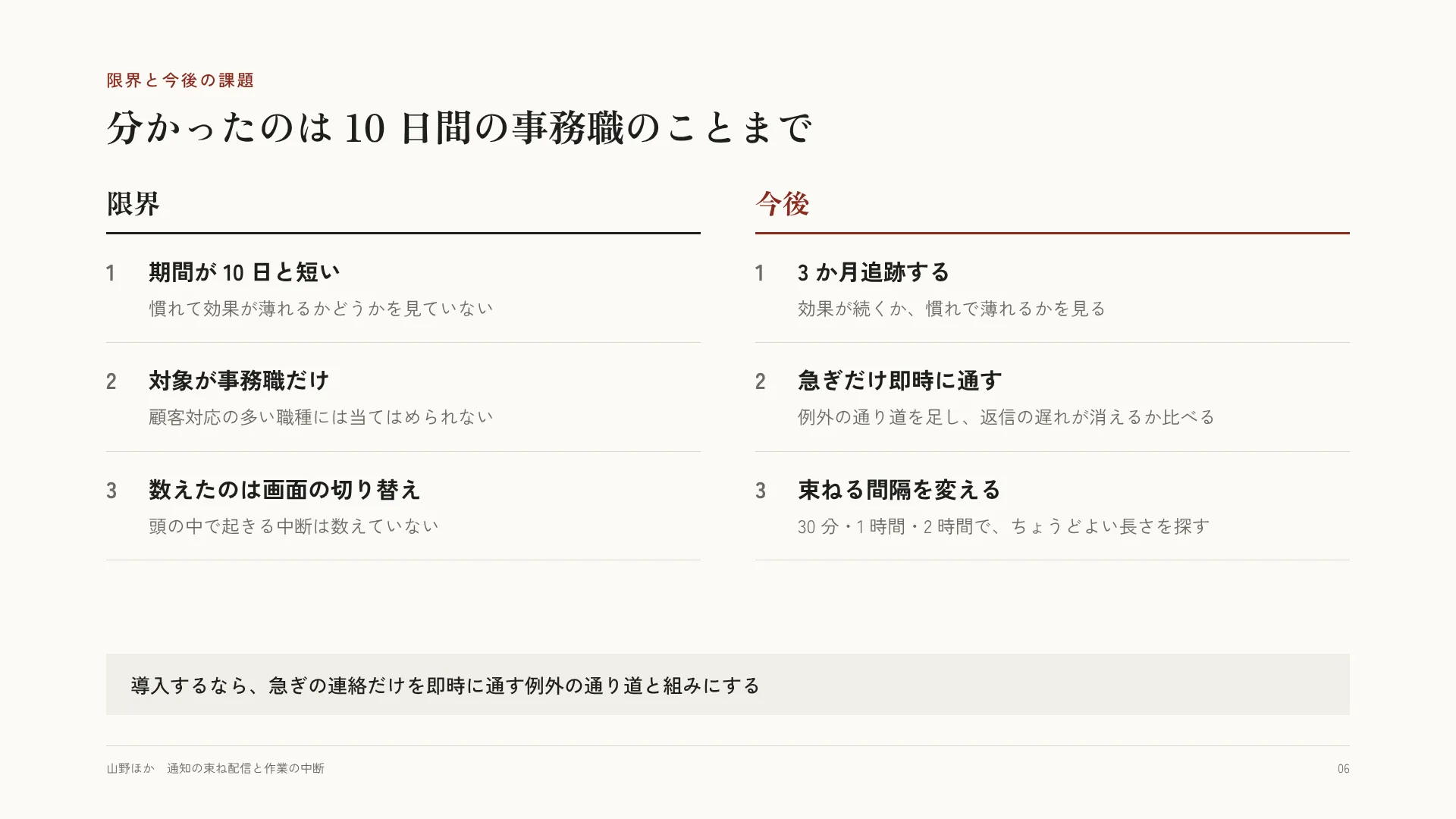
# Limitations and Next Steps — What We Don't Know, and How to Find Out
Produce one slide to the following specification.

- Canvas 1920 × 1080
- Margin top 88 right 140 bottom 56 left 140

## Type (px against a 1920px canvas)
kicker  22px / 500 / tracking 0.12em / tabular numerals
title  50px / 700 / leading 1.4 / tabular numerals
colHead  36px / 700 / tabular numerals
num  30px / 700 / tabular numerals
itemHead  30px / 700 / tabular numerals
itemBody  24px / 400 / leading 1.6 / tabular numerals
bottom  26px / 500 / tabular numerals
folio  16px / 400 / tabular numerals

## Colour
Ground #FBFAF6 / Surface #F1EFE8 / Ink #1E1E1C / Muted #6B6A64 / Accent #8A2B1E / Rule #DCD8CC

## Constraints — dropping these breaks it
- Pair by number: next step 1 addresses limitation 1
- Each limitation is a heading and one line — no long excuses
- Only the next-steps heading takes the accent
- End with one line on what the result already means in practice

Replace the content with [your content]. Keep the measurements and colours as given.
For an exact reproduction, use the verbatim HTML at https://design-vault.pages.dev/designs/limitations-future-work/pattern.html.

---

# References — Numbered in Order of Citation, With Author, Year, Title and Venue
Produce one slide to the following specification.

- Canvas 1920 × 1080
- Margin top 88 right 140 bottom 56 left 140

## Type (px against a 1920px canvas)
kicker  22px / 500 / tracking 0.12em / tabular numerals
title  50px / 700 / leading 1.4 / tabular numerals
refNo  26px / 700 / tabular numerals
ref  26px / 400 / leading 1.6 / tabular numerals
note  20px / 400 / tabular numerals
folio  16px / 400 / tabular numerals

## Colour
Ground #FBFAF6 / Surface #F1EFE8 / Ink #1E1E1C / Muted #6B6A64 / Accent #8A2B1E / Rule #DCD8CC

## Constraints — dropping these breaks it
- Number in order of citation — alphabetical order makes the reader hunt for [3]
- One citation style throughout
- Fix the number column so wrapped lines align with the text
- Only the venue in bold

Replace the content with [your content]. Keep the measurements and colours as given.
For an exact reproduction, use the verbatim HTML at https://design-vault.pages.dev/designs/references-numbered/pattern.html.

---

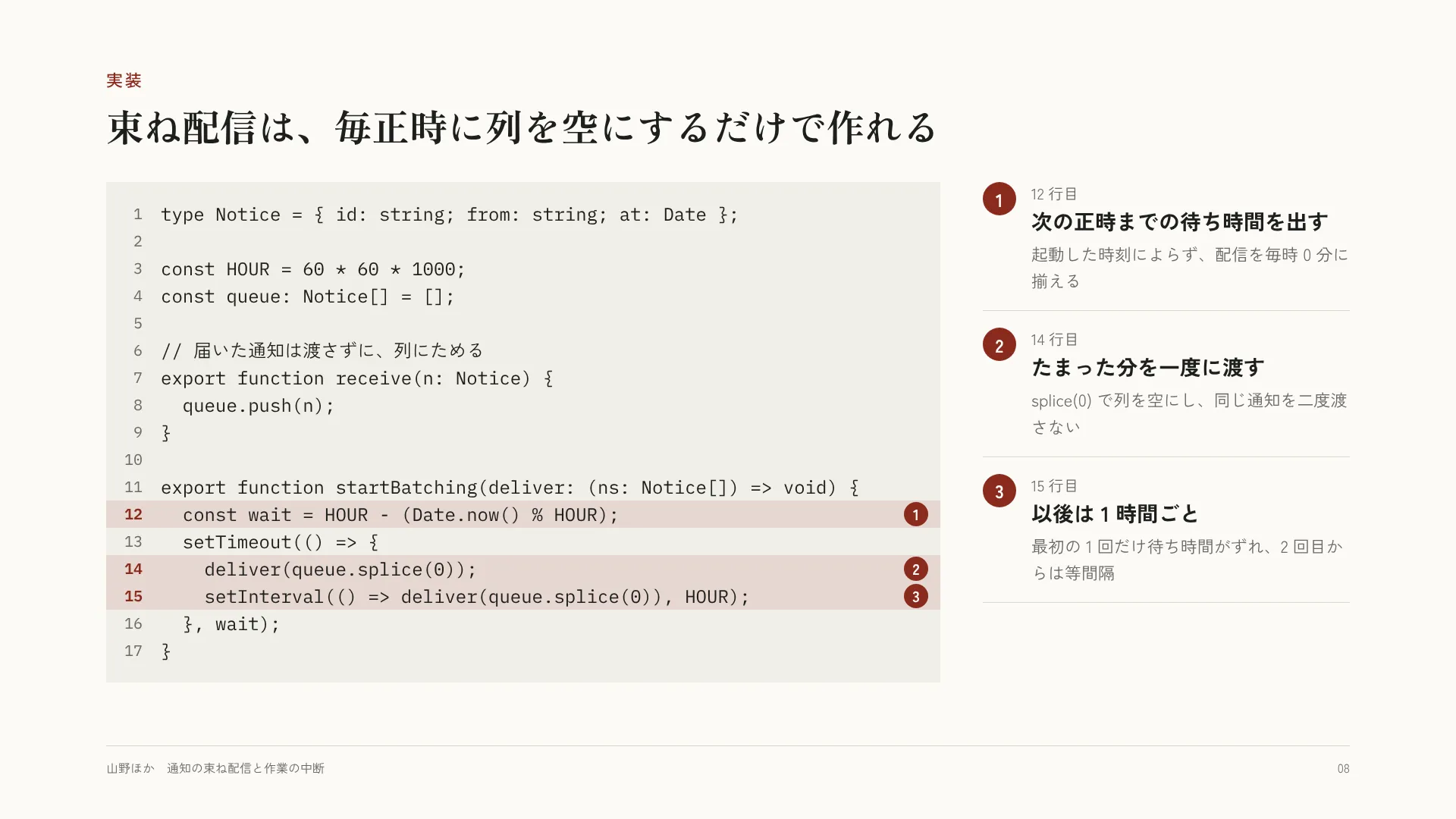
# Code Slide — Line Numbers, Highlighted Lines, Notes Tied by Number
Produce one slide to the following specification.

- Canvas 1920 × 1080
- Margin top 88 right 140 bottom 56 left 140

## Type (px against a 1920px canvas)
kicker  22px / 500 / tracking 0.12em / tabular numerals
title  50px / 700 / leading 1.4 / tabular numerals
lineNo  20px / 400 / leading 1.5 / tabular numerals
code  24px / 400 / leading 1.5 / tabular numerals
markNo  24px / 700 / tabular numerals
noteLine  20px / 400 / tabular numerals
noteHead  28px / 700 / tabular numerals
noteBody  22px / 400 / leading 1.6 / tabular numerals
folio  16px / 400 / tabular numerals

## Colour
Ground #FBFAF6 / Surface #F1EFE8 / Ink #1E1E1C / Muted #6B6A64 / Accent #8A2B1E / Rule #DCD8CC

## Constraints — dropping these breaks it
- Highlight three lines at most — explain everything and nothing stands out
- Notes say what the line does and why — not a reading of the code
- Twenty lines at most, at 24px or more; elide the rest with an ellipsis
- Show the line number on both sides so the eye can travel back and forth

Replace the content with [your content]. Keep the measurements and colours as given.
For an exact reproduction, use the verbatim HTML at https://design-vault.pages.dev/designs/code-highlight-lines/pattern.html.

---

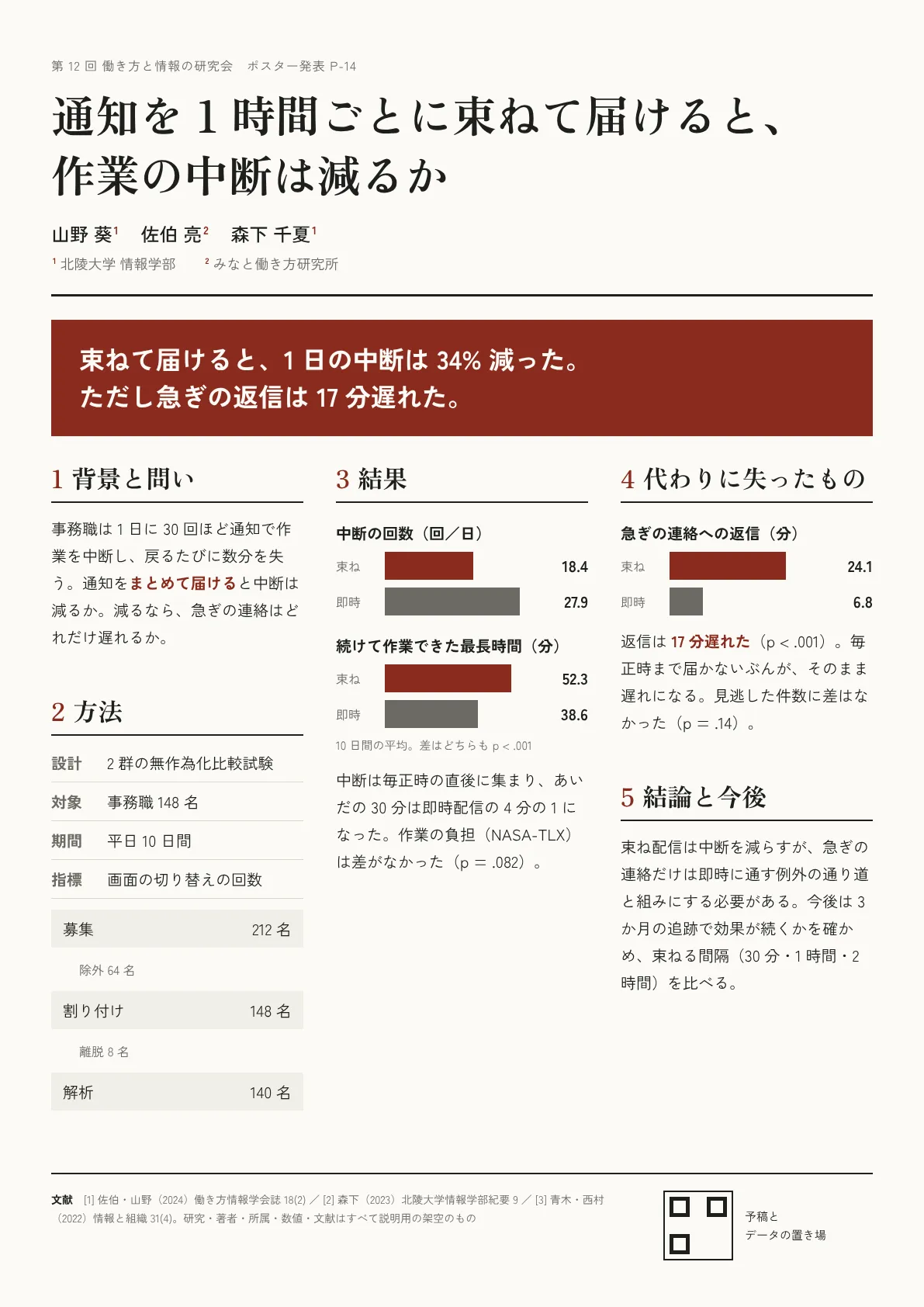
# Conference Poster (A0 Portrait) — Title, One-Line Finding, Three Columns
Produce one A4 page to the following specification.

- Canvas 1191 × 1684
- Margin top 72 right 66 bottom 60 left 66
- 3 equal columns, gap 42

## Type (px against a 1191px canvas)
venue  16px / 400 / tracking 0.06em / tabular numerals
title  57px / 700 / leading 1.35 / tabular numerals
authors  24px / 500 / tabular numerals
affiliation  18px / 400 / tabular numerals
finding  33px / 700 / leading 1.45 / tabular numerals
secHead  32px / 700 / tabular numerals
body  20px / 400 / leading 1.75 / tabular numerals
item  20px / 400 / leading 1.55 / tabular numerals
flow  20px / 400 / tabular numerals
miniHead  20px / 700 / tabular numerals
miniLabel  16px / 400 / tabular numerals
miniValue  20px / 700 / tabular numerals
small  15px / 400 / leading 1.6 / tabular numerals
refs  14px / 400 / leading 1.7 / tabular numerals
qrText  15px / 400 / leading 1.6 / tabular numerals

## Colour
Ground #FBFAF6 / Surface #F1EFE8 / Ink #1E1E1C / Muted #6B6A64 / Accent #8A2B1E / Rule #DCD8CC

## Constraints — dropping these breaks it
- Put the finding right under the title in one line — it is all a passer-by takes away
- Number the sections so the three columns read from top left to bottom right
- Show numbers as figures; do not restate them in prose
- A-series sizes share one ratio: compose at A4 portrait proportions and scale to A0 when printing

Replace the content with [your content]. Keep the measurements and colours as given.
For an exact reproduction, use the verbatim HTML at https://design-vault.pages.dev/designs/poster-a0-three-column/pattern.html.
# Research Title — Title, Authors and Affiliations Tied by Superscript Numbers
format: slide-16x9
density: low
layout:
  kind: centered
  canvas:
    w: 1920
    h: 1080
  margin:
    top: 96
    right: 140
    bottom: 72
    left: 140
type:
  venue:
    size: 24
    weight: 400
    tracking: 0.06em
    numeric: tabular
  title:
    size: 68
    weight: 700
    leading: 1.45
    numeric: tabular
  subtitle:
    size: 32
    weight: 500
    numeric: tabular
  authors:
    size: 34
    weight: 500
    numeric: tabular
  affiliation:
    size: 24
    weight: 400
    leading: 1.7
    numeric: tabular
  contact:
    size: 22
    weight: 400
    numeric: tabular
colors:
  ground: "#FBFAF6"
  surface: "#F1EFE8"
  ink: "#1E1E1C"
  muted: "#6B6A64"
  accent: "#8A2B1E"
  rule: "#DCD8CC"
rules:
  - Phrase the title as the question or the finding — 'a study on X' tells nobody what was learned
  - The subtitle names the design and the sample (randomised trial, 148 people)
  - Tie authors to affiliations with superscripts; do not repeat an affiliation per author
  - Serif for the title only; gothic from the authors down

---

# Question, Hypothesis, Method — The Study's Frame in Three Bands
format: slide-16x9
density: medium
layout:
  kind: stack
  canvas:
    w: 1920
    h: 1080
  margin:
    top: 88
    right: 140
    bottom: 56
    left: 140
type:
  kicker:
    size: 22
    weight: 500
    tracking: 0.12em
    numeric: tabular
  title:
    size: 50
    weight: 700
    leading: 1.4
    numeric: tabular
  label:
    size: 40
    weight: 700
    numeric: tabular
  text:
    size: 32
    weight: 500
    leading: 1.6
    numeric: tabular
  itemLabel:
    size: 24
    weight: 700
    numeric: tabular
  item:
    size: 26
    weight: 400
    leading: 1.5
    numeric: tabular
  folio:
    size: 16
    weight: 400
    numeric: tabular
colors:
  ground: "#FBFAF6"
  surface: "#F1EFE8"
  ink: "#1E1E1C"
  muted: "#6B6A64"
  accent: "#8A2B1E"
  rule: "#DCD8CC"
rules:
  - Put a number in the hypothesis (a 30% drop, within 30 minutes) — otherwise the results cannot be checked against it
  - Write the method as four items — design, sample, period, main measure — not prose
  - Labels share one column width so all content starts on one line
  - Question and hypothesis, two lines each at most

---

# Participant Flow — Numbers at Every Stage, and Why People Were Dropped
format: slide-16x9
density: medium
layout:
  kind: flow
  canvas:
    w: 1920
    h: 1080
  margin:
    top: 88
    right: 140
    bottom: 56
    left: 140
type:
  kicker:
    size: 22
    weight: 500
    tracking: 0.12em
    numeric: tabular
  title:
    size: 50
    weight: 700
    leading: 1.4
    numeric: tabular
  stage:
    size: 20
    weight: 700
    tracking: 0.08em
    numeric: tabular
  n:
    size: 32
    weight: 700
    numeric: tabular
  why:
    size: 20
    weight: 400
    leading: 1.6
    numeric: tabular
  folio:
    size: 16
    weight: 400
    numeric: tabular
colors:
  ground: "#FBFAF6"
  surface: "#F1EFE8"
  ink: "#1E1E1C"
  muted: "#6B6A64"
  accent: "#8A2B1E"
  rule: "#DCD8CC"
rules:
  - Give the count at every stage, and make each drop match the excluded number
  - State every exclusion reason with its count — unexplained exclusions look like cherry-picking
  - Main path shaded, exclusions outlined, so the eye can follow the path
  - Lines bend at right angles and never cross

---

# Results Table — Mean ± SD and p, Significant Rows in Bold
format: slide-16x9
density: high
layout:
  kind: table
  canvas:
    w: 1920
    h: 1080
  margin:
    top: 88
    right: 140
    bottom: 56
    left: 140
type:
  kicker:
    size: 22
    weight: 500
    tracking: 0.12em
    numeric: tabular
  title:
    size: 50
    weight: 700
    leading: 1.4
    numeric: tabular
  tableCaption:
    size: 26
    weight: 400
    numeric: tabular
  colHead:
    size: 22
    weight: 500
    numeric: tabular
  item:
    size: 26
    weight: 700
    numeric: tabular
  value:
    size: 26
    weight: 700
    numeric: tabular
  diff:
    size: 26
    weight: 700
    numeric: tabular
  p:
    size: 26
    weight: 700
    numeric: tabular
  note:
    size: 20
    weight: 400
    leading: 1.7
    numeric: tabular
  folio:
    size: 16
    weight: 400
    numeric: tabular
colors:
  ground: "#FBFAF6"
  surface: "#F1EFE8"
  ink: "#1E1E1C"
  muted: "#6B6A64"
  accent: "#8A2B1E"
  rule: "#DCD8CC"
rules:
  - Three rules — top, under the header, bottom — and no vertical rules
  - Bold the significant rows and state the threshold (p < .05) under the table
  - Give the difference its direction and confidence interval
  - Put the table number and each group's n in the title above

---

# Figure With Caption — One Large Figure, a Numbered Caption Beside It
format: slide-16x9
density: medium
layout:
  kind: annotated
  canvas:
    w: 1920
    h: 1080
  margin:
    top: 88
    right: 140
    bottom: 56
    left: 140
type:
  kicker:
    size: 22
    weight: 500
    tracking: 0.12em
    numeric: tabular
  title:
    size: 50
    weight: 700
    leading: 1.4
    numeric: tabular
  captionNo:
    size: 30
    weight: 700
    numeric: tabular
  caption:
    size: 24
    weight: 400
    leading: 1.75
    numeric: tabular
  captionNote:
    size: 20
    weight: 400
    leading: 1.7
    numeric: tabular
  folio:
    size: 16
    weight: 400
    numeric: tabular
colors:
  ground: "#FBFAF6"
  surface: "#F1EFE8"
  ink: "#1E1E1C"
  muted: "#6B6A64"
  accent: "#8A2B1E"
  rule: "#DCD8CC"
rules:
  - Start the caption with the figure number, then what was measured, then what it shows
  - Label series at the line ends, not in a legend
  - Two annotations at most — only the points the caption refers to
  - Method and sample size go small under the caption

---

# Limitations and Next Steps — What We Don't Know, and How to Find Out
format: slide-16x9
density: medium
layout:
  kind: 2-column
  canvas:
    w: 1920
    h: 1080
  margin:
    top: 88
    right: 140
    bottom: 56
    left: 140
type:
  kicker:
    size: 22
    weight: 500
    tracking: 0.12em
    numeric: tabular
  title:
    size: 50
    weight: 700
    leading: 1.4
    numeric: tabular
  colHead:
    size: 36
    weight: 700
    numeric: tabular
  num:
    size: 30
    weight: 700
    numeric: tabular
  itemHead:
    size: 30
    weight: 700
    numeric: tabular
  itemBody:
    size: 24
    weight: 400
    leading: 1.6
    numeric: tabular
  bottom:
    size: 26
    weight: 500
    numeric: tabular
  folio:
    size: 16
    weight: 400
    numeric: tabular
colors:
  ground: "#FBFAF6"
  surface: "#F1EFE8"
  ink: "#1E1E1C"
  muted: "#6B6A64"
  accent: "#8A2B1E"
  rule: "#DCD8CC"
rules:
  - "Pair by number: next step 1 addresses limitation 1"
  - Each limitation is a heading and one line — no long excuses
  - Only the next-steps heading takes the accent
  - End with one line on what the result already means in practice

---

# References — Numbered in Order of Citation, With Author, Year, Title and Venue
format: slide-16x9
density: high
layout:
  kind: stack
  canvas:
    w: 1920
    h: 1080
  margin:
    top: 88
    right: 140
    bottom: 56
    left: 140
type:
  kicker:
    size: 22
    weight: 500
    tracking: 0.12em
    numeric: tabular
  title:
    size: 50
    weight: 700
    leading: 1.4
    numeric: tabular
  refNo:
    size: 26
    weight: 700
    numeric: tabular
  ref:
    size: 26
    weight: 400
    leading: 1.6
    numeric: tabular
  note:
    size: 20
    weight: 400
    numeric: tabular
  folio:
    size: 16
    weight: 400
    numeric: tabular
colors:
  ground: "#FBFAF6"
  surface: "#F1EFE8"
  ink: "#1E1E1C"
  muted: "#6B6A64"
  accent: "#8A2B1E"
  rule: "#DCD8CC"
rules:
  - Number in order of citation — alphabetical order makes the reader hunt for [3]
  - One citation style throughout
  - Fix the number column so wrapped lines align with the text
  - Only the venue in bold

---

# Code Slide — Line Numbers, Highlighted Lines, Notes Tied by Number
format: slide-16x9
density: medium
layout:
  kind: annotated
  canvas:
    w: 1920
    h: 1080
  margin:
    top: 88
    right: 140
    bottom: 56
    left: 140
type:
  kicker:
    size: 22
    weight: 500
    tracking: 0.12em
    numeric: tabular
  title:
    size: 50
    weight: 700
    leading: 1.4
    numeric: tabular
  lineNo:
    size: 20
    weight: 400
    leading: 1.5
    numeric: tabular
  code:
    size: 24
    weight: 400
    leading: 1.5
    numeric: tabular
  markNo:
    size: 24
    weight: 700
    numeric: tabular
  noteLine:
    size: 20
    weight: 400
    numeric: tabular
  noteHead:
    size: 28
    weight: 700
    numeric: tabular
  noteBody:
    size: 22
    weight: 400
    leading: 1.6
    numeric: tabular
  folio:
    size: 16
    weight: 400
    numeric: tabular
colors:
  ground: "#FBFAF6"
  surface: "#F1EFE8"
  ink: "#1E1E1C"
  muted: "#6B6A64"
  accent: "#8A2B1E"
  rule: "#DCD8CC"
rules:
  - Highlight three lines at most — explain everything and nothing stands out
  - Notes say what the line does and why — not a reading of the code
  - Twenty lines at most, at 24px or more; elide the rest with an ellipsis
  - Show the line number on both sides so the eye can travel back and forth

---

# Conference Poster (A0 Portrait) — Title, One-Line Finding, Three Columns
format: a4-portrait
density: high
layout:
  kind: 3-column
  canvas:
    w: 1191
    h: 1684
  margin:
    top: 72
    right: 66
    bottom: 60
    left: 66
  columns:
    count: 3
    gap: 42
type:
  venue:
    size: 16
    weight: 400
    tracking: 0.06em
    numeric: tabular
  title:
    size: 57
    weight: 700
    leading: 1.35
    numeric: tabular
  authors:
    size: 24
    weight: 500
    numeric: tabular
  affiliation:
    size: 18
    weight: 400
    numeric: tabular
  finding:
    size: 33
    weight: 700
    leading: 1.45
    numeric: tabular
  secHead:
    size: 32
    weight: 700
    numeric: tabular
  body:
    size: 20
    weight: 400
    leading: 1.75
    numeric: tabular
  item:
    size: 20
    weight: 400
    leading: 1.55
    numeric: tabular
  flow:
    size: 20
    weight: 400
    numeric: tabular
  miniHead:
    size: 20
    weight: 700
    numeric: tabular
  miniLabel:
    size: 16
    weight: 400
    numeric: tabular
  miniValue:
    size: 20
    weight: 700
    numeric: tabular
  small:
    size: 15
    weight: 400
    leading: 1.6
    numeric: tabular
  refs:
    size: 14
    weight: 400
    leading: 1.7
    numeric: tabular
  qrText:
    size: 15
    weight: 400
    leading: 1.6
    numeric: tabular
colors:
  ground: "#FBFAF6"
  surface: "#F1EFE8"
  ink: "#1E1E1C"
  muted: "#6B6A64"
  accent: "#8A2B1E"
  rule: "#DCD8CC"
rules:
  - Put the finding right under the title in one line — it is all a passer-by takes away
  - Number the sections so the three columns read from top left to bottom right
  - Show numbers as figures; do not restate them in prose
- "A-series sizes share one ratio: compose at A4 portrait proportions and scale to A0 when printing"  Research Title — Title, Authors and Affiliations Tied by Superscript Numbers
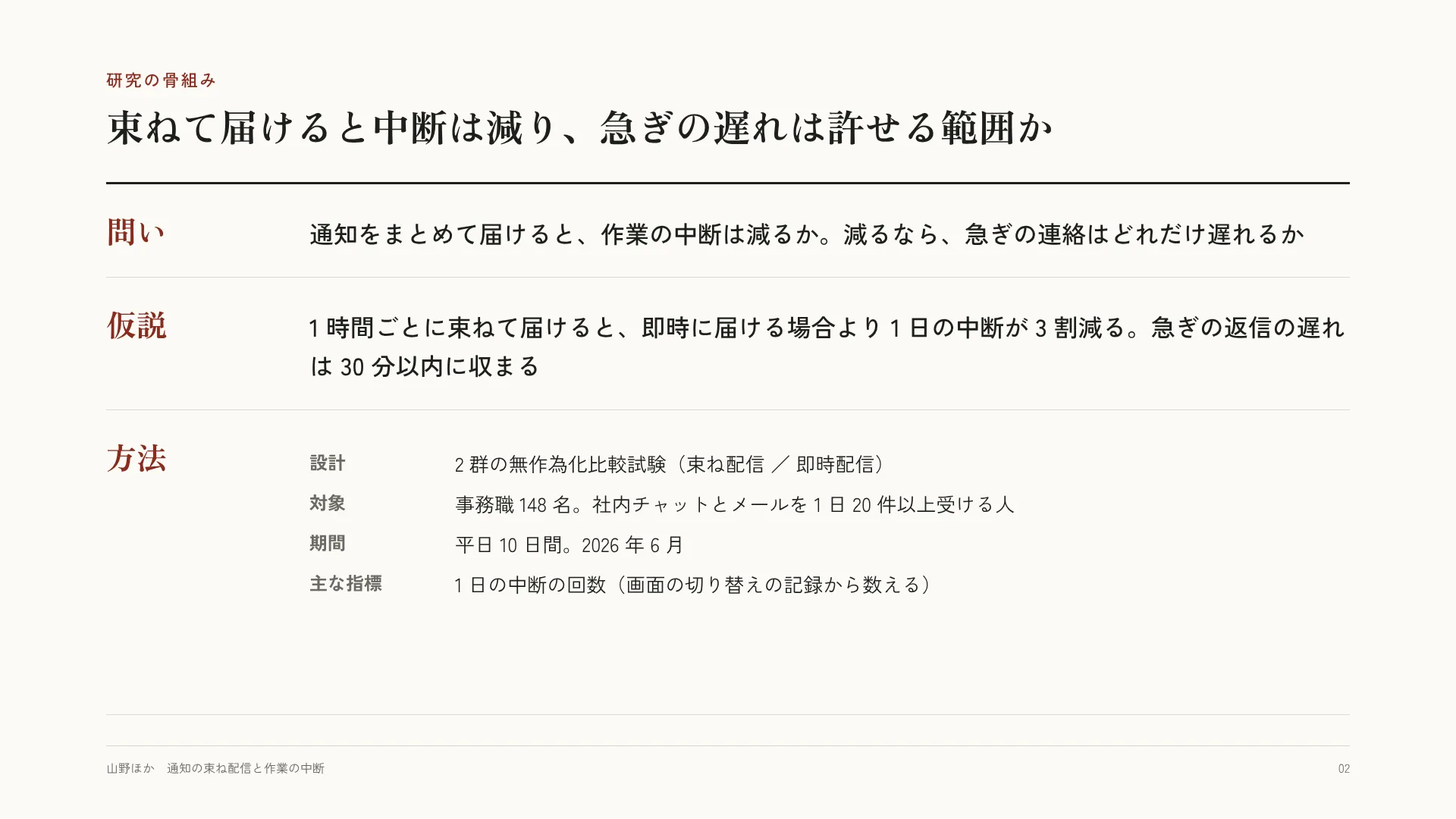 Question, Hypothesis, Method — The Study's Frame in Three Bands
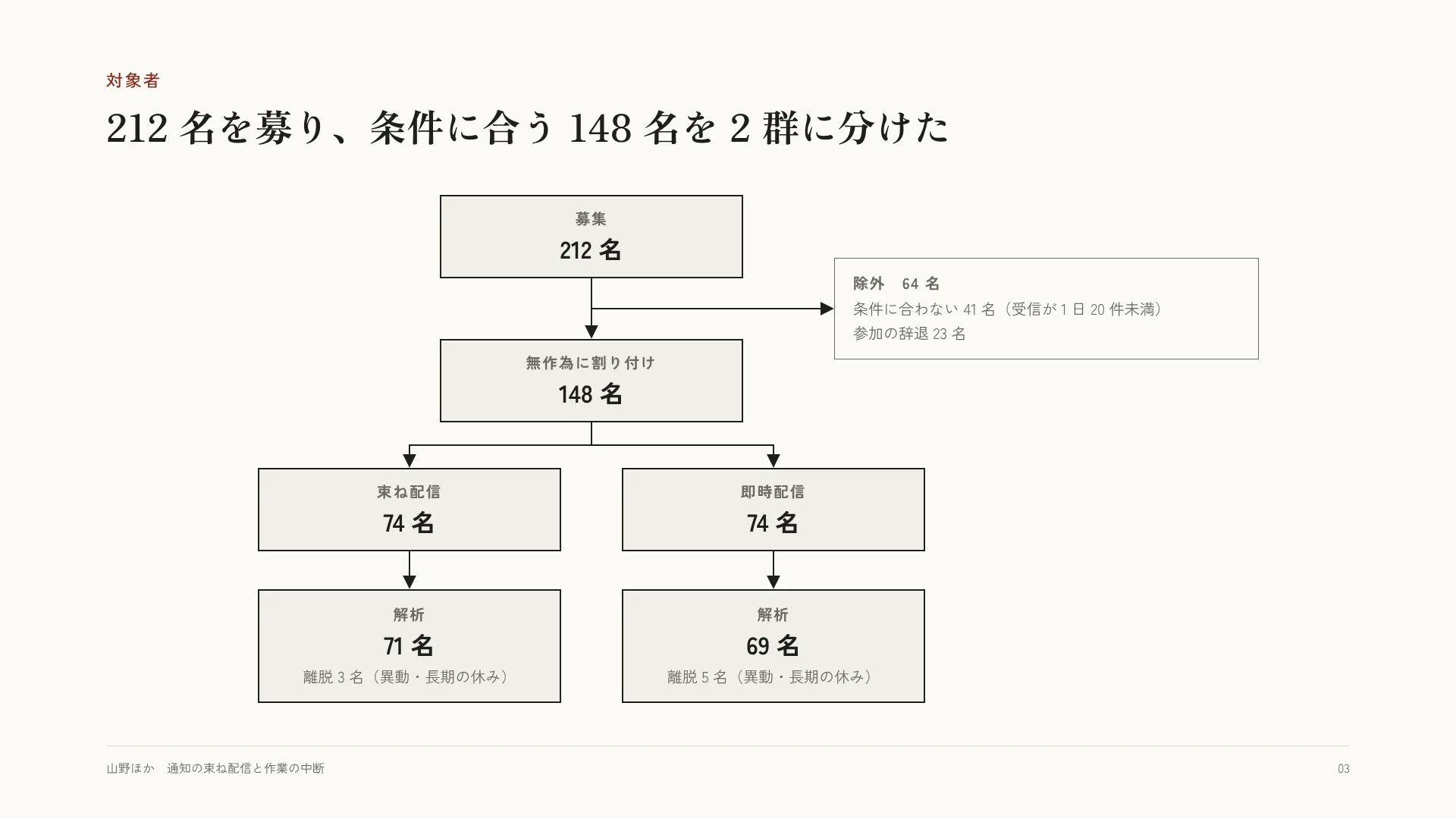 Participant Flow — Numbers at Every Stage, and Why People Were Dropped
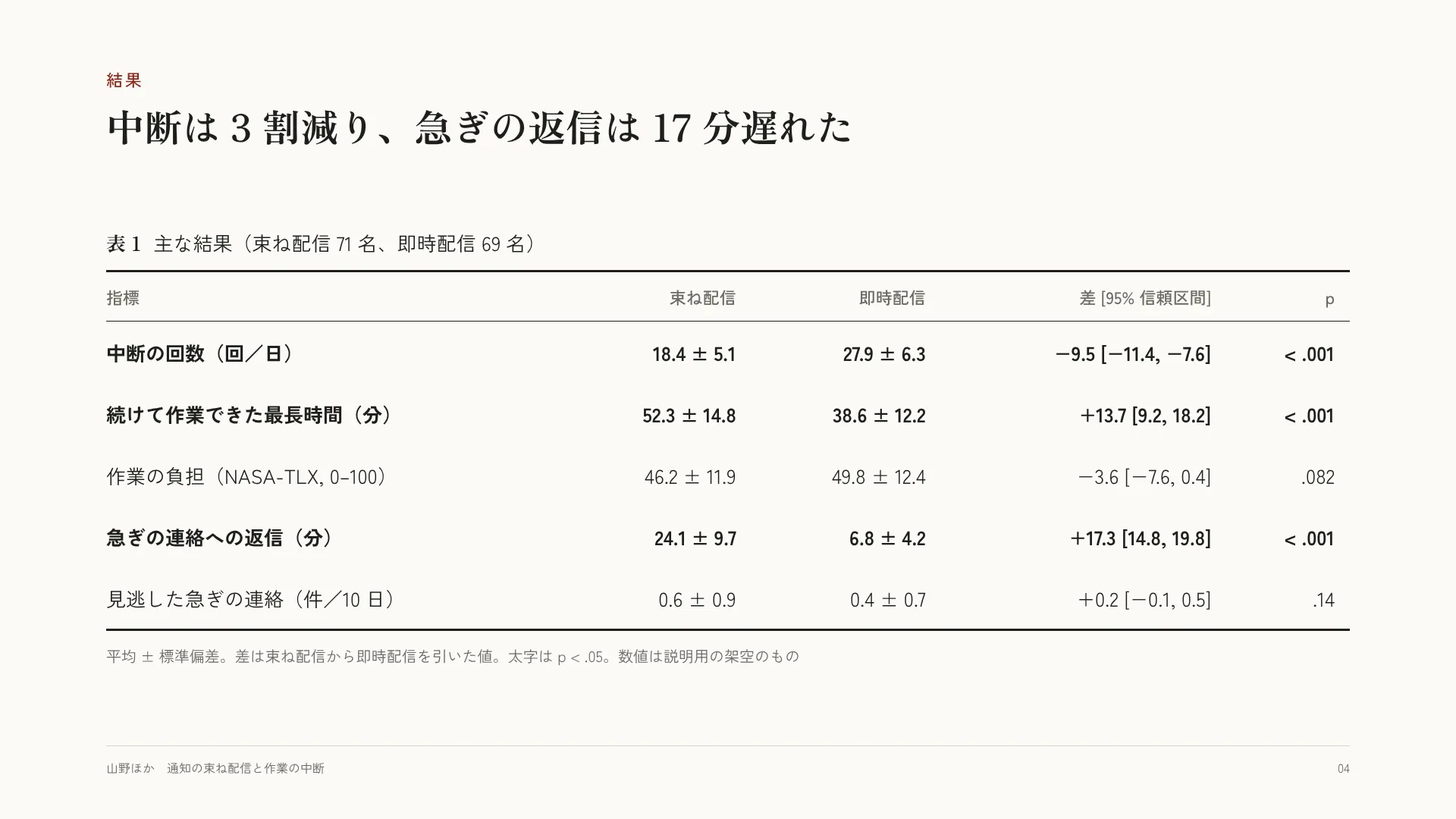 Results Table — Mean ± SD and p, Significant Rows in Bold
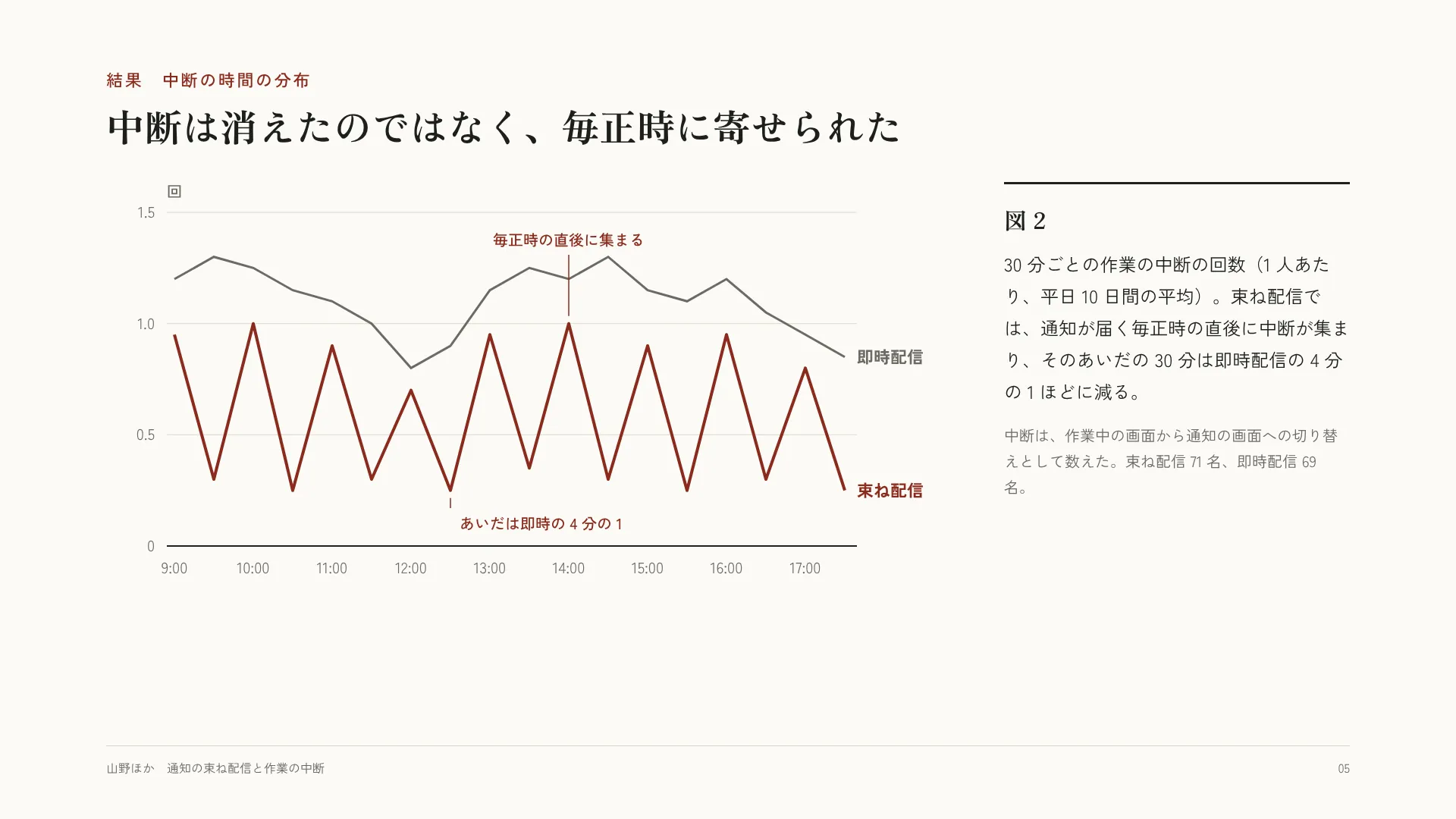 Figure With Caption — One Large Figure, a Numbered Caption Beside It
 Limitations and Next Steps — What We Don't Know, and How to Find Out
 References — Numbered in Order of Citation, With Author, Year, Title and Venue
 Code Slide — Line Numbers, Highlighted Lines, Notes Tied by Number
 Conference Poster (A0 Portrait) — Title, One-Line Finding, Three Columns